|
|
|
COVER
STORY |
 |
|
| |
| |

|
|
Tapping Sustainable Energy Alternatives
|
|
|
The second lead article, which is also focus article, is written by Shri N Bhadran Nair. Citing a report of the World Health Organisation, the author has advocated for tapping sustainable energy alternatives
|
|
|

|
|
|

|
|
Financing Renewables in India
|
|
|
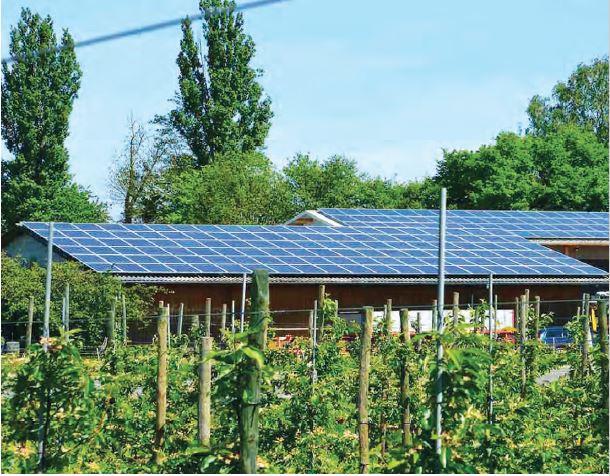
The third article is written by Shri P C Maithani, Adviser, Ministry of New and Renewable Energy. He has focussed on renewable energy resources
|
|
|
|
|
|
|
Steps to Achieve India’s Solar Potential
|
|
|
The special article is written by Sumant Sinha, Chairman and Managing Director of ReNew Power. He opines that India must also honour its global commitments on curbing greenhouse gas emissions
|
|
|
|
|
|
|
Lead Article
Textiles the word brings up images of beautiful drapes cotton, silk, chiffon, lace. Whether it is the material draped on the figurine of the lady from Mohenjadaro, the stylish drapes of Cleopatra, the ball dance gowns of the Victorian Era or the lovely dresses worn by our own queens and princesse...
read more... |
|
|
|
|
|
|
|
|
|
Employment Guarantee – Lifeline for the rural poor
|
|
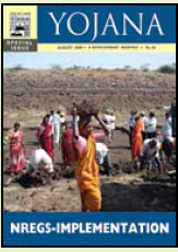
Over two years since it became operational, the National Rural Employment Guarantee Act (NREGA) 2005 has had a positive impact on the lives of millions of people across the poorest districts in the country. the Act, which guarantees 100 days of employment per household at minimum wages, is the first piece of legislation that compels the state to provide a social safety net for impoverished rural households. the scheme is now being implemented in the entire country from April this year. Although implementation has suffered such as those mentioned in the draft report of the comptroller and Auditor General of India. So some call it a source of corruption; others say it is the best thing to have happened in rural development. the truth is that the scheme is both. there are villages where it has provided employment to a large number of people leading to creation of public assets, whereas in some parts funds have been siphoned off. the problems associated with its implementation are teething problems. the adoption of a right-based approach to work has contributed to enhancing the quality of life in rural areas. there are enough experiences to show that corruption can largely be prevented through strict enforcement of the transparency safeguards. the social audits of NREGA have revealed, there are standout success stories. Reports have shown that in Rajasthan, where public awareness of the programme is high, 77 days of employment per rural household were provided in 2006-07. In tamil Nadu, the participation of women was as high as 81%. Reports show that embezzlement of funds, irregularities in the muster rolls and other types of corruption can be reduced. Social audits and use of Right to Information Act by civil society groups and activists have exposed corruption. these surveys revealed that corruption is much less when compared to food-for-work programme implemented in the past. there is more public scrutiny of development works. Apart from tackling corruption, there are also concerns such as the absence of worksite facilities for women with
children and the need for fair revision of the schedule of rates. these issues need to be addressed swiftly. None of them must be allowed to deter the wholehearted implementation of an Act that has become a lifeline for millions of Indians who have been left out by high economic growth.
|
|
|
|
|
|
|
|
|
|
|
|
|
|
|
|
|
|
|
Regular
Column |
 J&K Window : J&K Window : |
|
|
|
Do you know? : What is Forensic Auditing |
|
Forensic auditing refers to the auditing with the main aim to employ accounting techniques and methods to gather evidence to investigate the crimes on financial front such as theft, fraud etc.
|
|
|
|
|
|
|